What You’ll Take Away:
- Hands-on learning helps children learn through active participation rather than passive instruction.
- An after-school programme often includes guided tasks, supervised exploration, and practical activities with clear outcomes.
- This approach keeps children engaged after school while supporting focus, participation, and everyday skill-building.
- It also reinforces habits such as following instructions, managing time, and completing tasks within a structured routine.
Introduction
If you have ever watched your child’s eyes light up while building something, cooking a new dish, or solving a puzzle with friends, you’ve seen hands-on learning in action.
It is one of those things that sounds simple, but makes a real difference in how children grow. For parents trying to figure out what their child should be doing after school, it is worth understanding what it actually means and why it matters for their learning and development.
So, What Exactly Is Hands-On Learning?
Instead of sitting and listening to instructions, children build, experiment, create and solve. Whether it’s a STEM challenge, a cooking activity, or a group project, the child is at the centre of the experience.
The value of this approach focuses on how it turns learning into something children can experience for themselves. Instead of being told what to do, children are guided through activities that encourage them to take part, make decisions, and see the results of their effort.
After a long school day, this type of learning can also feel more manageable and engaging. It offers variety and supports purposeful development at the same time.
Why Does This Matter for Primary School Children?
Primary school in Singapore is a busy, demanding time. Academic pressure builds early and your child often comes home with spelling lists, math homework and a lot of mental energy already spent.
What they need after school is not more sitting and listening. They need time to engage and explore, the kind of learning experiences that recharge rather than drain.
Hands-on learning provides children with that. When a child successfully builds a simple structure in a STEM activity or figures out why an experiment did not work the first time, they build resilience and a love for learning that no worksheet can replicate.
It also supports what they are learning in school. A child who has physically sorted objects understands grouping better. One who has followed a recipe understands fractions differently. The doing reinforces the knowing.
What Hands-On Learning Looks Like
This is where many parents get curious. It sounds great in theory, but what does it look like on a typical Tuesday afternoon?
Here are some examples of what hands-on learning looks like in a thoughtfully designed after-school care programme:
1. Guided Activities With Clear Outcomes
Every activity has a clear goal, something children can work towards, complete, and actually see the result of. They may be asked to follow a process, complete a task, or work towards a finished result that they can see and reflect on.
This could include STEM Challenges, simple experiments, baking sessions, creative construction tasks, or activities that require step-by-step problem-solving. The structure matters because it helps children stay focused and understand what they are working towards.
2. Learning Through Doing Rather Than Sitting Still
After a full day in the classroom, most children not only need a change of environment, they need a change of pace. Hands-on activities keep them mentally engaged while giving them room to move.
When they are invited to build something, take part in a simple group activity, practise through games, or work on a small project, learning starts to feel more natural again. This helps children maintain energy, supports attention, and gives them an alternative way to process ideas. That variety makes a difference. It keeps children present and engaged rather than just waiting for the afternoon to end.
These hands-on moments give children a chance to move, think, talk, and explore in a different way. Instead of feeling like the afternoon is just more “school time”, they get to stay engaged while still enjoying a healthier change of pace.
3. Supervised Exploration in a Safe Environment
As a parent, you may wonder whether “hands-on learning” will still give your child enough structure, or if it will simply feel like playtime. In a well-managed after-school programme, children are still guided with clear expectations and gentle supervision. They have space to try things out, ask questions, and explore ideas, while educators stay close enough to keep them meaningfully engaged.
By learning through experiences, children have room to explore within a clear framework.
It is all about the balance: children have enough freedom to stay curious while still having enough structure to stay on track. A supervised environment allows children to explore more confidently, with guidance in place to support both learning and safety.
4. Reinforcement of Everyday Skills
Many hands-on activities also support practical life skills in natural ways. When children are asked to complete a task, organise materials, manage time, or follow a series of steps, they are also building habits that support everyday learning and responsibility.
These moments may seem small, but they are important in an after-school care. Over time, children develop greater follow-through and learn how to approach tasks more independently.
Why Parents Value Hands-On Learning
Most parents who speak to us are not only looking for somewhere safe for their child to be. They want their children to develop holistically during those hours. Hands-on learning often shows its value in what parents can notice when their child gets home.
1. It Keeps Children Engaged and Productive
After a full day at school, it is tempting for children to reach straight for a screen the moment they get home. When the afternoon has been spent on something purposeful, parents often find their child arrives home settled rather than restless and more willing to wind down. The hours between school and bedtime feel less like a battle and more like a natural part of the day.
2. It Supports Better Focus and Behaviour
When children are given something purposeful to do, they find it easier to settle into the afternoon and can focus better.
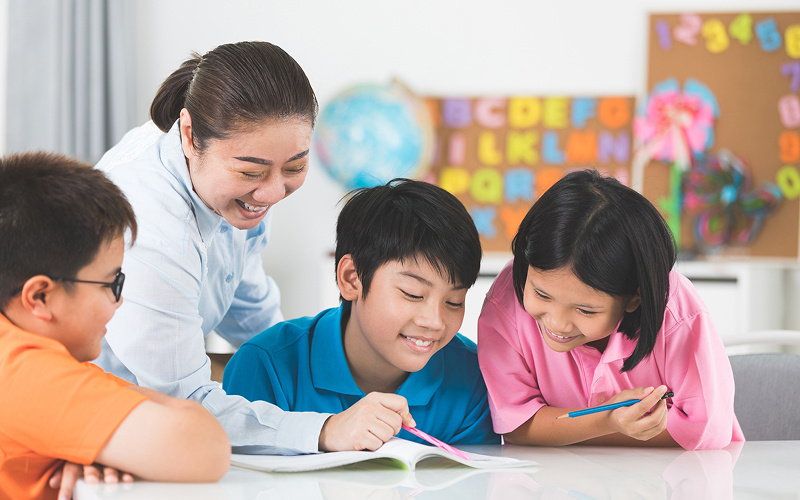
Instead of feeling restless or disengaged, children are given activities that channel attention and encourage steady participation. For many parents, that makes a noticeable difference to how the child experiences the rest of the day.
Parents may see this in small ways. A child who usually comes home cranky after a long school day may seem calmer because they had a chance to move, create, and interact. Another who tends to lose focus may settle into the evening routine more easily or stick with a task they would otherwise have moved on from. These moments may seem minor on their own but they add up to a smoother end to the day.
3. It Balances Academic Work With Enrichment
Children still need structure after school, but they also need variety. Hands-on learning helps balance academic responsibilities with experiences that feel different from classroom instruction. This can prevent the after-school period from becoming overly repetitive or mentally draining.
Rather than extending the school day, it gives children a different kind of engagement, one that supports development without feeling like more of the same. From the parents’ perspective, this can feel reassuring.
After a full day in school, you may not want your child to spend the whole afternoon doing more of the same. Instead, you want them to stay engaged while also having time to enjoy learning. With a balanced after-school routine, your child still gets the structure needed, but in a way that feels easier to settle into after school.
What Hands-On Learning Looks Like at Curos
At Curos, hands-on learning is woven into our programmes every week.
Our Programme is built to support children to learn how to think and not just what to think. Through rotating weekly programmes, children get meaningful learning experiences in STEM, life skills, digital literacy and arts implemented in ways that feel engaging and purposeful, not like extra school.
What makes this work well for parents:
- Smaller groups mean every child actually gets to participate, not just watch
- Experienced educators guide activities so children stay safe, focused and genuinely engaged
- Daily updates are sent to parents, so you know what your child did and learned each afternoon
- Activities are designed to be fun and purposeful for their learning and development
This all happens within the after-school day. By the time your child is picked up, they’ve had their homework time, engaged with enrichment or hands-on learning, ready to head home rejuvenated.
Looking for After School Care Near You?
Curos has centres across Singapore designed with your child’s comfort and growth in mind. If you’re based in the north or central parts of Singapore, our after-school care at Thomson Plaza might be just the right fit for your family.
Other centres include ones at Bukit Timah Plaza and Parkway Centre.
Each Curos centre offers structured afternoons, quality enrichment, and genuine care so you can feel confident regardless of which location is closest to you.
Curious to See It for Yourself?
We offer parents centre tours so you can meet our team, see the space and get a feel for what your child’s afternoon would look like.
Book a centre tour at Curos. We would love to show you around.