What You’ll Take Away:
- In a smaller group, your child gets more chances to speak up, ask questions and actually be heard.
- Teachers can spot when something is not right and step in before learning gaps develop.
- Personalised guidance helps children better understand their work and develop stronger learning habits over time.
- Teachers get to know your child well enough to share specific, meaningful updates so you stay connected to their progress even when you are not there.
Introduction
When choosing an after-school programme, academic support is usually the first thing on a parent’s checklist. While this is an important factor, the learning environment matters just as much. It is also easy to overlook until you know what to look for. In Singapore, where school days are full and academic pressure starts early, what happens between 2pm and 7pm matters more than most parents realise.
In settings with smaller class sizes, children get more attention, more chances to participate and a calmer space to settle in after a full day at school. With consistent support along the way, it becomes easier for them to focus on their tasks.
Here’s what changes when your child is in a smaller class size and why it matters more than most parents realise.
How Small Class Sizes in After-School Care Benefit Children
1. Greater Participation and Stronger Communication
In smaller groups, children have more opportunities to participate actively in discussions and activities. This can be especially helpful after a long day at school.
This benefits quieter children especially. With fewer children in the room, they feel less pressure and more at ease contributing. Over time, speaking up becomes natural, not something they have to push themselves to do.
This also plays out in practical ways during problem-solving. When a child explains how they arrived at an answer in Maths, they are more likely to spot where their thinking went wrong. A teacher can then guide them to the right approach more precisely. Such an exchange can only happen when a child feels comfortable enough to speak up. This is how smaller groups can support academic learning directly in an after-school student care with tuition.
2. Closer Observation and Timely Support
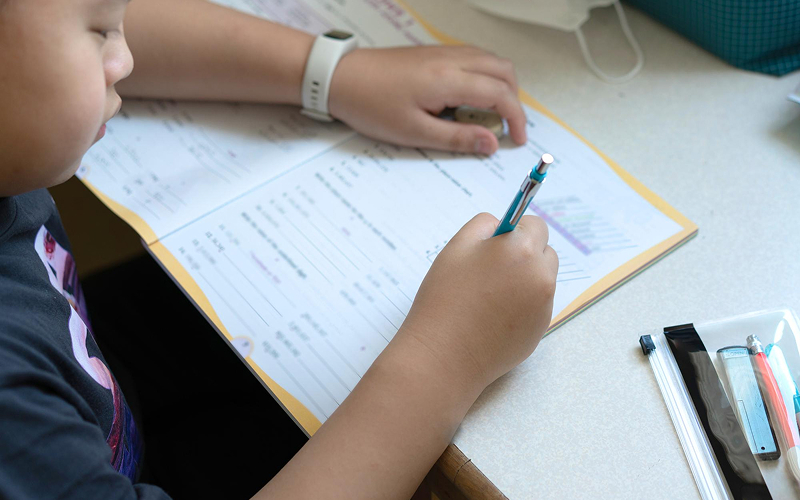
One of the key advantages of smaller groups is how closely teachers can observe each child. During homework time or guided activities, it is much easier to notice when a child is unsure, distracted, or quietly stuck on a concept.
Instead of waiting until misunderstandings become more significant, teachers can step in early to clarify instructions, explain concepts, or guide the child through the task. This also means children do not have to wait long to get help, which helps to keep their frustration low and their momentum going.
For parents, this is an important distinction: their child is not simply supervised during those hours but is also supported. It brings comfort in knowing that their child’s after-school hours are not just supervised, but thoughtfully cared for.
3. More Personalised Guidance During After-School Hours
After-school care is not just about getting homework done. Children also need guidance on how to manage their work and understand what is expected of them. In smaller groups, guidance provided can be more personalised.
With smaller class sizes, it is easier for teachers to offer individual instructions and adjust their support based on each child’s needs. Some children may require more explanation, while others may need encouragement to stay focused or attempt more challenging tasks. With fewer students, teachers are better able to respond to these differences.
For example, your child may understand what was taught in school, but still feel unsure about how to begin their homework. In a smaller group, the teacher has more time to notice these small but important moments and gently guide each child through them.
When children feel genuinely noticed, they are more likely to stay engaged and take ownership of their learning. This is what separates a premium after school care environment from one that simply goes through the afternoon.
4. Parents Stay Better Informed
For working parents, one of the concerns about after-school care is not knowing how their child is actually getting on. Their homework gets done, but was it understood? Their child settled in well, but did anything happen that afternoon worth knowing about?
In a smaller class size, teachers develop a much clearer picture of each child over time. They notice which topics a child finds tricky, where they tend to lose focus and when they have had a harder day than usual. Such awareness does not come easily in bigger settings.
This means that when a parent checks in, the feedback is specific and useful rather than a general reassurance that everything is fine. Instead of “she was good today,” a parent hears something they can actually work with, like a concept worth revisiting at home or progress worth acknowledging during conversations at home.
For many working parents who cannot be present during their child’s after-school hours, such feedback and visibility can be valuable. It turns after-school care from a gap in the day into something they feel genuinely connected to.
This kind of informed involvement makes a real difference to parents. It means you do not have to choose between being present at work and staying connected to your child’s progress. They are well taken care of, and you stay updated on the progress and what they are up to.
Creating a More Meaningful After-School Experience
Smaller class sizes shape more than how children experience their time after school; they shape how your child interacts, learns, and builds confidence. For parents, it’s important to look into not only what your child is doing after school but also how they are being supported and the quality of care they are receiving for long-term development.

How Curos Supports Learning Through Small Group Care
The right after-school environment helps shape how children think, how they handle challenges and how they show up at home at the end of the day.
At Curos, keeping groups small is a deliberate part of how we design the learning experience so every child gets the attention, support and consistency they need after a full day at school. Across our centres in Parkway Centre, Bukit Timah Plaza and Thomson Plaza, every child receives consistent attention, timely support and the kind of familiarity that comes from a teacher who genuinely gets to know them.
Contact us to explore how our after-school care can support your child’s learning, focus, and confidence.