What You’ll Take Away:
- Life skills for students can be developed naturally through structured after-school routines, guided activities, and social interaction.
- A quality after-school environment helps children practise communication, time management, emotional regulation, and critical thinking.
- Clear routines can make afternoons smoother by helping children manage homework, enrichment, rest, and play.
Introduction
After a full school day, children still need a steady routine before heading home for the evening. For busy parents in Singapore, the hours between dismissal and dinner can be one of the hardest parts of the day to balance. You want your child to be safe and cared for, but you also want their afternoon to feel meaningful, settled, and supportive.
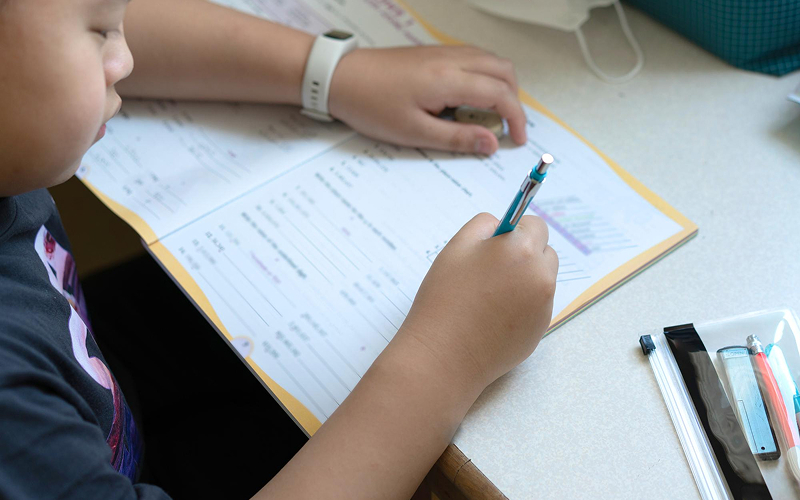
A structured after-school programme provides more than supervision once the school day ends. It creates a balanced environment where students can reinforce academic learning while developing essential life skills through guided routines and meaningful activities.
These life skills for students are not always developed through worksheets or classroom lessons alone. They grow through small, repeated moments, such as asking for help, waiting for a turn, and completing homework before play. In a quality after-school care setting, these daily routines are guided with care and purpose.
Why Life Skills Matter For Students After School
Primary school life in Singapore can be demanding. Children are learning to cope with schoolwork, assessments, friendships, co-curricular activities, and longer days away from home. By the time school ends, they may be tired, hungry, restless or mentally stretched.
This is why the after-school environment matters. The right setting can help children settle into the second half of the day without feeling like they are simply moving from one classroom to another. A thoughtful after-school care curriculum gives children enough structure to stay on track, while still allowing room for interaction, enrichment and rest.
For parents, this brings reassurance. Your child is not only being supervised until pick-up time. They are learning habits that support independence, confidence, and better everyday behaviour.
Four Life Skills For Students to Develop
1. Communication
Communication is one of the most important life skills because it affects how children learn, make friends, and ask for support. In school, children may not always have enough time or confidence to express themselves fully. After school, the setting is often smaller, calmer, and more familiar, giving them more chances to practise speaking and listening.
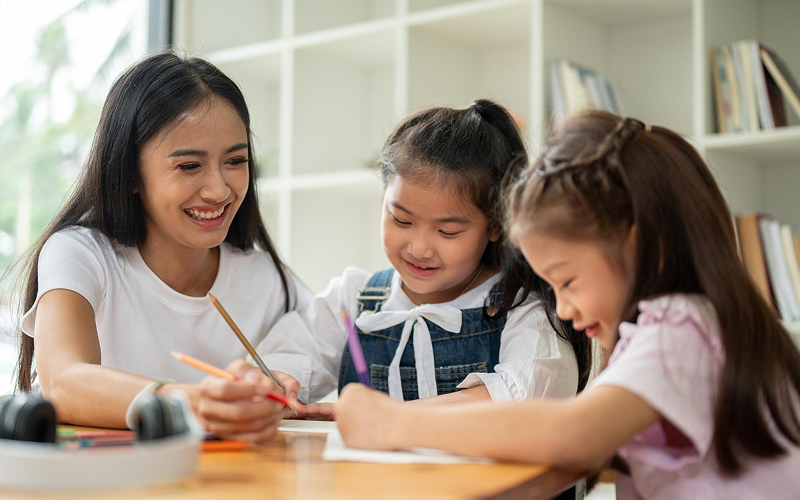
In a small-group after-school setting, students interact with peers and educators in a relaxed yet guided environment. Through group discussions, collaborative activities and daily routines, children learn how to express their thoughts more clearly, listen when others are speaking, and respond with respect.
This can happen in very simple ways. A child may have to explain what part of their homework they find difficult. They may need to share materials during an activity, ask a friend to join a game, or talk through a group challenge. Each of these moments gives them practice in using words, reading social cues, and understanding that communication is not only about speaking, but also about listening.
Over time, these experiences can support social confidence. Children become more comfortable interacting beyond their usual circle and more aware of how their words affect others. For parents, this can show up in small but meaningful ways, such as a child asking for help earlier or handling disagreements with more patience.
2. Time Management
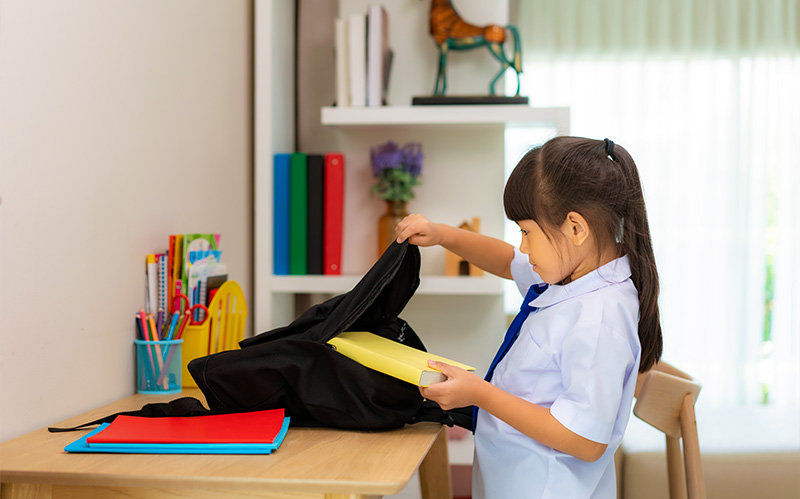
Time management is another important skill children gradually build after school. Many parents know how difficult it can be to get a child to complete homework, pack their bag, eat, shower, and settle down for the evening. Without a clear routine, the afternoon can easily become stressful for both parent and child.
Structured after-school routines help children understand how time is divided across the day. There may be dedicated periods for homework, enrichment, rest, meals, and play. This rhythm gives children a clearer sense of what needs to be done and when.
When children follow a routine consistently, they begin to develop habits such as planning ahead, completing tasks independently, and taking ownership of their responsibilities. They learn that homework should not always be delayed until the last moment. They also realise that rest and play are more comfortable when important tasks are completed first.
Time management takes practice and a routine helps children build discipline in a way that feels more natural. Instead of relying entirely on parents’ reminders, they begin to understand the flow of the afternoon and their role in managing it.
For busy parents, this can make a real difference. When your child has completed homework or spent time on enrichment before coming home, the evening may feel calmer and less rushed. The goal is not only productivity but also a smoother daily rhythm for the whole family.

3. Self-Regulation of Emotions
After school, children are not only carrying school bags. They may also be carrying frustration from a difficult lesson, disappointment from a friendship issue or tiredness from a long day. For some children, this emotional buildup only becomes apparent when they reach home.
A quality after-school environment gives children space to unwind and process these feelings with support.
Self-regulation does not mean children never get upset. It means they gradually learn what to do when they are upset. For example, a child may learn to ask an educator for help or try again after making a mistake.
This skill is especially important because emotional regulation affects learning and relationships. A child who can manage frustration is more likely to stay with a difficult task.
For parents, emotional regulation is often one of the most valuable outcomes of a well-managed after-school routine. It can help children transition into the evening with less resistance, fewer meltdowns, and a better ability to talk about what happened during the day.
Our P1 Excellence Programme teaches students to identify their feelings, name them and express them. It’s a 50-session social-emotional learning (SEL) curriculum designed for Curos by a clinical psychologist. Students are guided on identifying their feelings then moving on to drama-based public speaking. By the end, your child will be equipped with the skills to emotionally self-regulate and voice out their feelings.
4. Critical Thinking
Children also need opportunities to think beyond right-or-wrong answers. While school learning often involves assessments and structured outcomes, after-school activities can give children more room to explore, test ideas, and solve problems in practical ways.
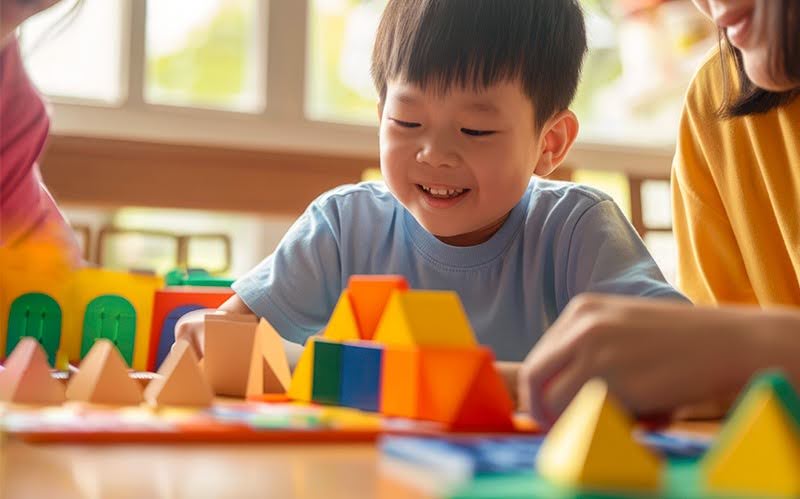
Critical thinking develops when children are encouraged to ask questions, make decisions, and adjust their approach when something does not work. This can happen through hands-on projects, STEM challenges, coding and robotics, group activities, puzzles, creative tasks, or real-world discussions.
For example, when children build a simple structure, they need to consider balance, materials, and sequence. When solving a puzzle with friends, they need to compare ideas and choose a strategy. These are not just enrichment activities but are also opportunities for them to think logically and build resilience.
Quality academic enrichment programmes should not simply support students academically after school. Instead, they should help children experience learning in different ways. When enrichment is meaningful and hands-on, children can connect ideas to real-life situations and become more confident in their thinking.
This matters because children need more than memorisation to succeed. They need to learn how to stay curious, consider different possibilities, and keep trying when the first answer is not obvious.
What a Good After-School Care Curriculum Should Include
A strong after-school care curriculum should support the whole child. Homework support is important, but it should not be the only focus. Children also need time to build friendships, explore interests, develop independence, and practise everyday responsibilities.
For parents, it may help to look for a programme that offers:
- Clear routines that help children settle into the afternoon
- Homework support in a calm and guided setting
- Enrichment activities that encourage thinking, creativity and participation
- Small-group interaction where children can build social confidence
- Educators who understand both learning and emotional needs
- A safe environment where children feel cared for and supported
The best programmes do not treat after-school hours as empty time to fill. They see those hours as an opportunity to help children grow in steady, age-appropriate ways.
Gaining Support From Curos’ After-School Programme
Curos supports life skills development through a structured after-school programme that combines clear routines, small-group guidance, and hands-on activities. Students build responsibility, communication, problem-solving, and emotional awareness in a calm, supportive environment. These life skills for students help grow their confidence and independence beyond the classroom.
Our programme also takes a holistic approach by introducing practical and future-ready skills. Students gain exposure to real-world topics such as taxes and tariffs, helping them understand everyday financial concepts from an early age. At the same time, coding and robotics workshops develop logical thinking and digital literacy, equipping them with skills that are increasingly relevant in today’s world.
What makes this helpful for busy parents is the balance. Your child receives structure after school, but not in a way that feels like another full day of sitting still. They have time for homework, enrichment, interaction, and guided routines, all within an environment designed to support both learning and well-being.
Looking for quality after-school support?
Book a centre tour to explore our space and understand what your child’s afternoon could look like.